
Wire Rope Wedge Socket Selection and Setup
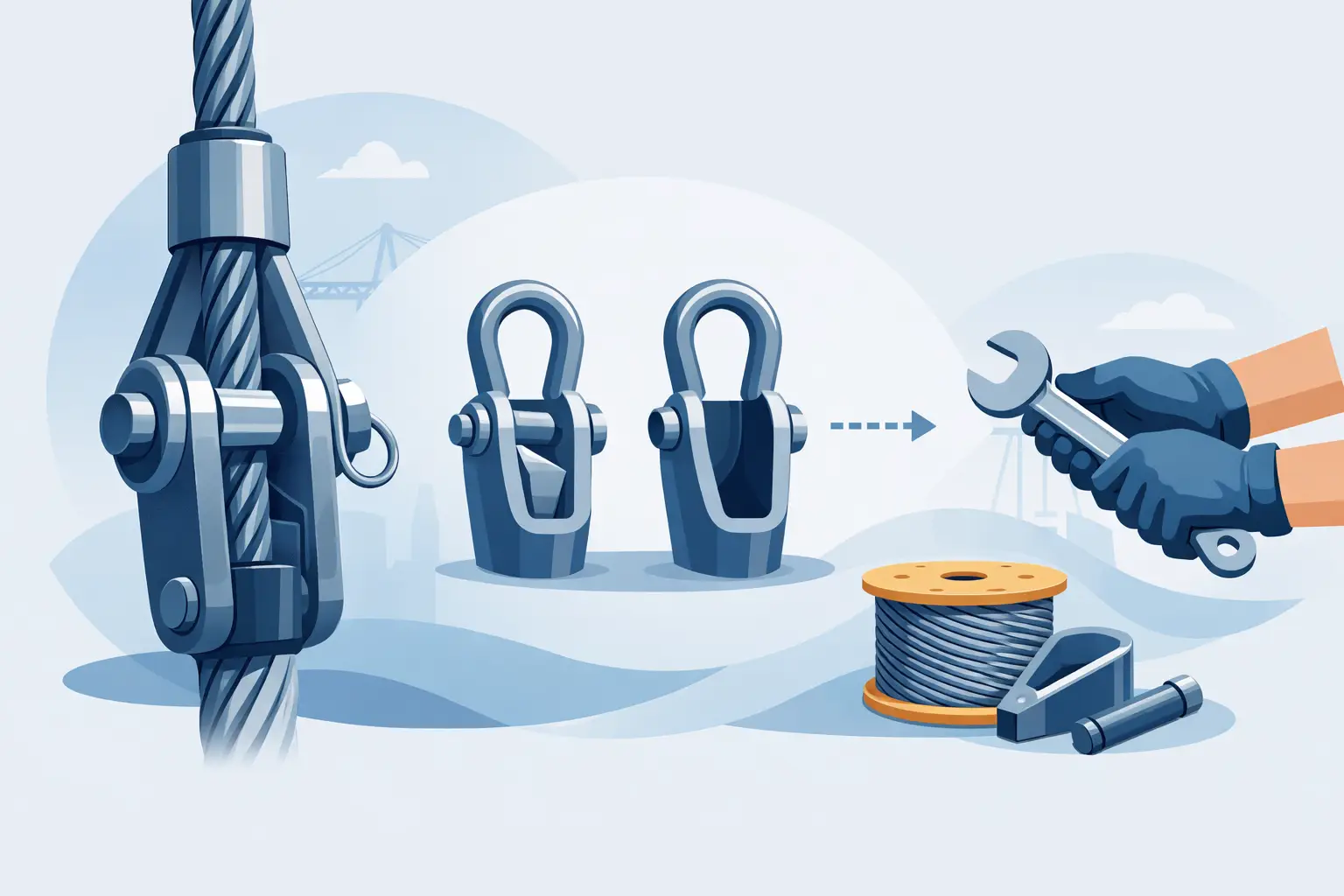
A wire rope wedge socket is a practical termination for cranes, winches, towing systems, and rigging assemblies that need reliable field serviceability. When it is correctly matched to the rope, installed to the manufacturer’s instructions, and inspected before use, it provides a secure dead-end connection without permanently swaging the rope.
For operations teams, the appeal is straightforward: a wedge socket can make rope replacement faster and reduce downtime. The risk is equally clear. A socket that is mismatched, assembled with the live line in the wrong location, or used beyond its rated capacity can compromise the entire lifting or pulling system.
What a Wire Rope Wedge Socket Does
A wedge socket terminates wire rope by routing the rope around a tapered wedge inside the socket body. When load is applied, the wedge is drawn into the socket and grips the rope. The greater the correctly applied load, the more firmly the wedge seats.
This design makes wedge sockets common on mobile cranes, draglines, winches, marine equipment, oilfield pulling applications, and other heavy-duty systems where wire rope may require replacement in the field. The socket body connects to the machine or rigging assembly through a pin, eye, or other approved connection point, while the rope is retained mechanically inside the socket.
A wedge socket is not a universal answer for every wire-rope termination. Swaged sockets, spelter sockets, and poured sockets may be better suited to applications requiring maximum termination efficiency, permanent assemblies, or specific fatigue-performance characteristics. The right choice depends on the rope type, equipment manufacturer requirements, duty cycle, environmental exposure, and required working load limit.
Select the Socket by Rope and Rated Capacity
The first selection rule is simple: match the socket to the exact nominal wire-rope diameter and construction specified by the socket manufacturer. A socket sized for a larger rope may not grip correctly. One sized for a smaller rope can damage the rope or prevent proper wedge seating.
Working load limit must also be evaluated as part of the complete assembly, not as an isolated product number. The allowable load is controlled by the lowest-rated component in the system. That includes the wire rope, wedge socket, hook or shackle, master link, crane block, attachment point, and any sling or load-control hardware in use.
Do not assume that the socket’s marked capacity automatically equals the capacity of the finished rope termination. Termination efficiency can vary by socket design, rope construction, installation method, and manufacturer guidance. This is especially relevant with rotation-resistant rope, compacted rope, plastic-impregnated rope, or ropes with specialized constructions. Some products are not approved for every rope type.
For procurement and maintenance teams, the specification should confirm the manufacturer, socket model or part number, rope diameter range, rated capacity, pin diameter, body dimensions, and approved rope constructions. Ordering a replacement wedge alone without verifying the socket model can create an unsafe mismatch. Wedges and socket bodies should be treated as matched components unless the manufacturer explicitly approves interchangeability.
Check Compatibility Beyond Diameter
Rope diameter is essential, but it is not the only fit requirement. The rope’s lay, strand pattern, core type, and lubrication condition can influence performance. Equipment manuals may also require a particular socket configuration or a minimum tail length.
For high-consequence lifting work, use certified components from established manufacturers and retain the documentation needed for inspection and traceability. A lower upfront price does not offset a shutdown, damaged equipment, or an incident involving suspended loads.
Correct Installation Controls the Result
A wedge socket is designed to grip the loaded, or live, part of the rope in the socket body. The dead end exits the socket alongside the live line. Socket markings and manufacturer instructions identify the intended rope path. Never reverse the arrangement to make the tail look neater or to fit an improvised connection.
Before installation, inspect the socket body, wedge, pin, and rope. Remove from service any component with cracks, deformation, excessive corrosion, damaged threads, a bent pin, altered markings, or evidence of welding or unauthorized repair. The rope must also be free from severe kinking, crushing, birdcaging, broken wires, heat damage, and other conditions that affect strength.
The rope should be seated cleanly around the wedge without twisting, crossing, or being forced into place. Avoid hammering the wedge into position unless the manufacturer specifically permits that practice. Forceful installation can damage the rope, distort the wedge, or create a false sense that the assembly is properly seated.
After assembly, apply an initial controlled load in accordance with the equipment and socket manufacturer’s procedure. This seats the wedge under load. Then inspect the rope position, tail, wedge seating, and socket body before returning the equipment to service.
Do not use wire-rope clips, a bolt, welding, or another improvised method to make an incorrect socket installation acceptable. Some manufacturers specify a retaining clip or other component for a particular socket design, but that component is not the primary load-bearing grip. Follow the instructions for the exact product in service.
Common Wedge Socket Failures to Prevent
Most wedge socket problems start before the lift. A rushed replacement during a rig move, a missing wedge, or an assumption that two similar-looking parts are compatible can put the operation at risk.
The following conditions require immediate attention:
- A wedge that has moved, cracked, flattened, or no longer seats as designed.
- A socket body with spreading, distortion, corrosion loss, cracks, or illegible identification markings.
- Wire rope showing broken wires near the termination, crushing, abrasion, kinks, or movement that indicates poor seating.
- A dead end that is too short, unsecured where the manufacturer requires retention, or interfering with the live line.
- Any assembly that has been shock-loaded, overloaded, heated, welded, or modified in the field.
Shock loading deserves particular attention. A wedge socket may hold under a steady load but experience much higher forces when a load snags, drops suddenly, or is pulled at an angle. Good lift planning, proper line alignment, controlled travel, and trained operators protect the termination as much as the hardware selection itself.
Inspection Frequency Should Match the Work
A pre-use visual inspection is the minimum expectation for equipment exposed to daily lifting or pulling service. Operators should look for rope damage, wedge movement, socket distortion, missing pins or retainers, and signs that the load line has not stayed in its intended path.
Periodic documented inspections should be performed by a qualified person according to the applicable regulations, site procedures, manufacturer guidance, and service severity. Offshore, marine, drilling, mining, and abrasive construction environments may require more frequent checks because salt exposure, grit, vibration, and repeated loading accelerate wear.
Inspection records should identify the socket and rope assembly, the date, inspector, observed condition, and corrective action. This is not paperwork for its own sake. It helps maintenance teams identify recurring failure patterns, control replacement inventory, and remove damaged components before they affect uptime.
When Replacement Is the Better Decision
Wedge sockets are serviceable products, but not every component should be reused. If a socket body is damaged or its markings are gone, replacement is usually the responsible choice. If the rope has been overloaded, kinked, crushed, or exposed to heat, replacing only the wedge does not restore the integrity of the assembly.
Use genuine, correctly identified replacement wedges, pins, and retainers. A component that appears to fit may have a different taper, material grade, or dimensional tolerance. In a safety-critical termination, close enough is not an acceptable specification.
Build Procurement Around Uptime
Field crews need the right socket when the rope is being changed, not after the equipment is already down. Stocking commonly used rope diameters, matched wedges, pins, and approved retention components can shorten repair time and prevent substitutions.
For less common crane, marine, or oilfield configurations, confirm the equipment model, wire-rope specification, required working load limit, and manufacturer part number before ordering. Pro Oil Field Supply supports heavy-duty lifting and wire-rope hardware requirements with product-focused sourcing for operations that cannot afford extended equipment downtime.
The best wedge socket installation is rarely the one that looks quickest at the jobsite. It is the one built from correctly matched, rated components, checked by qualified personnel, and ready to carry the load without creating the next maintenance problem.