
How to Choose Shackle Size for Safe Lifts
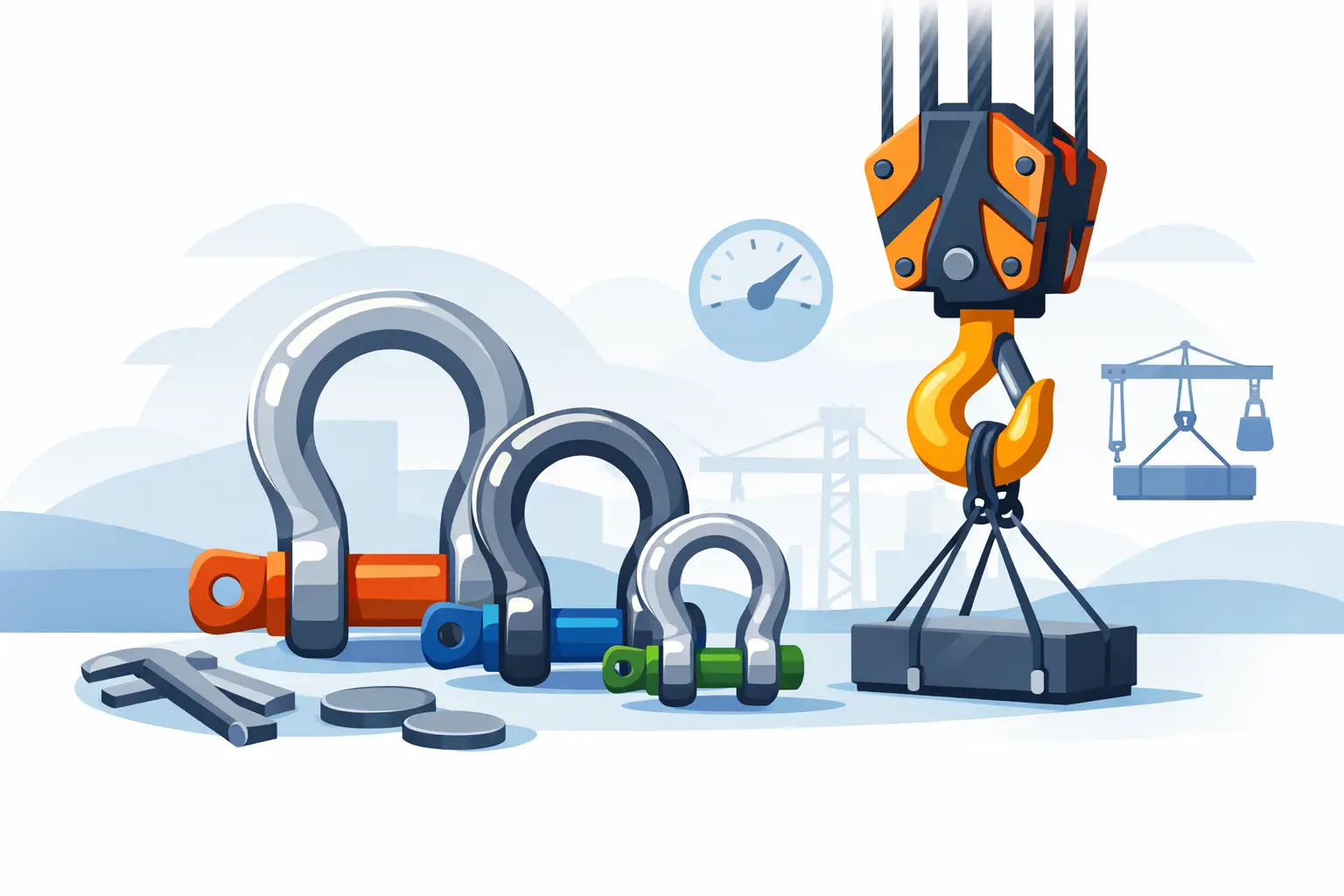
A shackle that looks large enough can still be the wrong shackle for the lift. In rigging, the question of how to choose shackle size is not answered by bow width or pin diameter alone. The correct selection must match the required working load limit, the sling and attachment dimensions, the loading direction, and the operating conditions.
For procurement teams and rigging supervisors, this is a practical control point. An undersized or improperly loaded shackle can damage slings, side-load a pin, reduce available capacity, or take critical lifting equipment out of service. Start with the load calculation, then confirm that the hardware fits and performs as a complete rigging assembly.
Start With the Required Working Load Limit
The first specification to establish is the working load limit, or WLL. This is the maximum load the shackle is rated to support in its intended configuration. It is not the breaking strength, and it should never be treated as a target load for routine lifting.
Determine the maximum expected load, including the item being lifted plus any lifting beams, spreader frames, below-the-hook devices, or attached components carried by the same connection. Then account for the rigging arrangement. Sling angle, leg loading, center-of-gravity location, and possible load movement can raise the force applied to each shackle well above a simple share of the total load.
For example, a two-leg bridle does not automatically place half the load on each leg. As sling angles become shallower, leg tension rises. The shackle at the top connection must be selected for the resulting force in that specific configuration, not merely for half the lifted weight.
Choose a shackle with a WLL equal to or greater than the calculated load at that point in the rigging system. Do not compensate for an unclear load calculation by guessing at a larger body size. Verify the lift plan, configuration, and manufacturer rating first.
How to Choose Shackle Size Beyond Tonnage
A shackle size is commonly identified by its nominal size or body dimension, but that dimension is only one part of the selection. Two shackles with similar-looking pins may have very different WLLs depending on their design, material grade, and manufacturer series.
Use the manufacturer’s current catalog data and product markings to confirm these details:
- Working load limit for the exact shackle model
- Shackle type, such as anchor bow or chain D style
- Pin diameter and usable pin width
- Bow inside width and inside length
- Pin style, including screw pin or bolt-type safety pin
- Material, finish, and any stated operating restrictions
The WLL marking on the shackle body is the primary capacity reference. Dimensional information tells you whether the shackle will connect correctly to the sling, lifting point, hook, master link, or padeye. Both must work together.
A larger shackle is not automatically safer if it creates a poor connection. An oversized bow can allow a narrow sling eye to bunch or shift. A pin that is too small for the attachment hole can introduce unwanted movement. A component that does not seat properly can create point loading and premature wear.
Match the Shackle to the Sling and Connection
Before ordering or mobilizing hardware, check the dimensions of every item that will connect to the shackle. This includes wire rope eyes, synthetic sling eyes, chain components, master links, hooks, lifting lugs, and padeyes.
The shackle bow must provide enough internal space for the sling eye or connection without pinching, crowding, or forcing the component to sit at an angle. For wire rope slings, the eye should bear in the shackle bow where the contact area is broadest. Do not force a wire rope eye onto the pin unless the sling manufacturer specifically permits that connection and the fit is suitable.
Pin diameter matters just as much when connecting to padeyes and lifting lugs. The pin should fit the hole correctly, with enough clearance for installation but without excessive looseness. If the pin is too large, crews may be tempted to ream, grind, or modify the lug. If it is too small, the connection can move excessively and place load on an unintended area.
Never alter a shackle pin, bow, or lifting attachment to make a connection fit. Modification removes the assurance provided by the manufacturer’s rating and can create a serious inspection issue.
Select the Right Shackle Body Style
Anchor shackles, often called bow shackles, have a larger rounded body. Their shape provides more room for multiple sling eyes, a larger master link, or connections that require greater internal width. They are commonly used in multi-leg sling assemblies, lifting beams, and general rigging where the connection must accommodate more than one component.
Chain shackles, also called D shackles, have a narrower body profile. They are generally suited to in-line connections where one component is loaded directly through the shackle. Their compact shape can be useful when clearance is limited, but it offers less space for multiple attachments.
The choice depends on the connection, not preference alone. Loading multiple sling eyes into a narrow D shackle can crowd the hardware and create side loading. Using a bow shackle where an in-line connection is needed may be acceptable only when the manufacturer’s instructions and the actual load path support it.
Check Loading Direction and Side-Load Limits
Shackles are normally rated for straight-line loading through the centerline of the body and pin. When the load pulls to one side, capacity may be reduced. Side loading can bend the shackle body, cause the pin to rotate or bind, and place uneven force on the connection.
If a lift requires an angled connection, consult the specific manufacturer’s reduction guidance for that model. Do not apply a generic percentage reduction across all shackles. Allowable side loading and derating vary by product design and loading angle.
Avoid point loading the shackle bow with a narrow hook, lug, or link. The contact should distribute force over an appropriate bearing area. Also prevent the pin from being subjected to bending because attachments are too wide, misaligned, or loaded outside the intended plane.
For critical lifts, complex multi-leg arrangements, or uncertain loading paths, have a qualified person review the rigging plan before the equipment is issued. This is faster and less costly than correcting a mismatch after the lift is staged.
Choose the Pin Type for the Work Environment
Screw pin shackles are practical for many temporary or frequently changed connections. They allow quick assembly, but the pin must be fully engaged and regularly checked. Vibration, cyclic loading, and movement can cause screw pins to loosen if they are not properly secured and inspected.
Bolt-type shackles use a bolt, nut, and cotter pin or retaining arrangement. They are typically preferred where the connection will remain in service, where the load may rotate, or where vibration is expected. Their retention method provides added security, though installation takes longer and requires all components to be present and undamaged.
Do not substitute pins between shackles, even when they appear to fit. A replacement pin must be the correct manufacturer-approved component for the exact shackle model and size. Mixed components can change fit, material performance, and rated capacity.
Consider Site Conditions Before Finalizing the Size
A shackle selected for a controlled warehouse lift may not be suitable for offshore exposure, abrasive handling, extreme temperatures, or corrosive environments. Finish, corrosion resistance, inspection access, and compatibility with the surrounding rigging all affect service life.
Inspect shackles before each use for bent bodies, spreading at the bow, worn pin holes, thread damage, distorted pins, cracks, illegible markings, and unauthorized welding or grinding. Remove damaged or questionable hardware from service. A shackle with missing WLL identification should not be used for overhead lifting until it is properly evaluated under your company’s procedures.
Maintain traceability where required. Procurement records should tie the shackle’s manufacturer, item number, WLL, and certification documentation to the equipment received. This supports inspection programs, replacement planning, and faster response when field teams need an exact match.
Build the Order Around the Complete Assembly
The most reliable buying process begins with the lift requirement and ends with a verified assembly. Specify the load, WLL needed at each connection, shackle body style, pin type, key dimensions, quantity, certification needs, and delivery requirement. When replacing existing rigging hardware, provide the manufacturer, model or item number, rated capacity, and measurements rather than relying on a photo alone.
Pro Oil Field Supply can support this process with recognized lifting hardware, clear WLL specifications, and sourcing assistance for application-specific replacements. For urgent field demand, confirming the complete connection before shipment helps prevent costly returns, lift delays, and improvised solutions at the jobsite.
The right shackle is the one that carries the calculated load within its rated limits, fits every connection without forcing the assembly, and remains appropriate for the actual direction and conditions of the lift. Treat those checks as part of the lift, not as a purchasing detail.






One thought on “How to Choose Shackle Size for Safe Lifts”
Pingback: Custom Industrial Equipment Sourcing That Keeps Work Moving - Pro Oil Field Supply