
Swivel Hoist Rings for Lifting Selection Guide
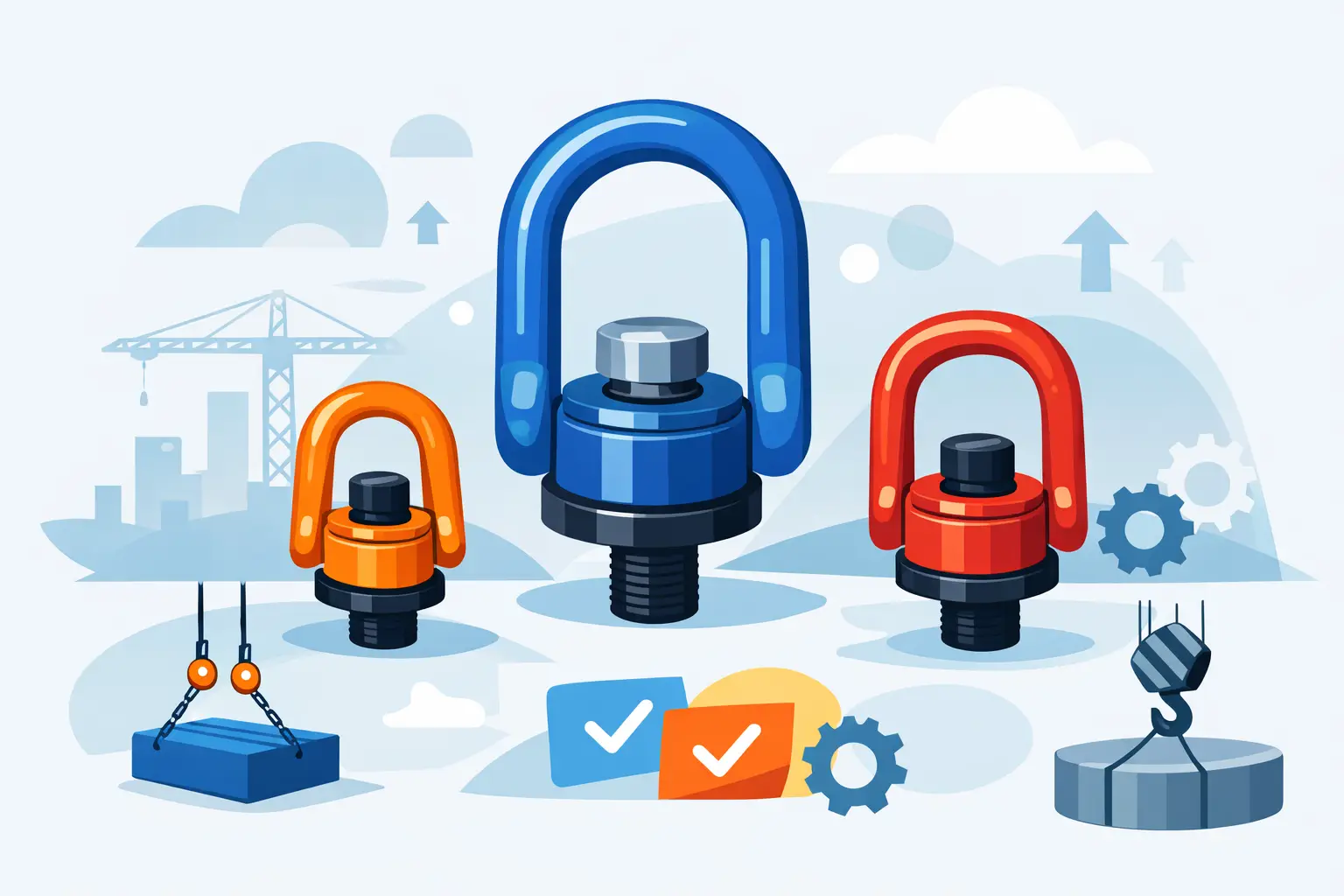
A lifting point that cannot align with the sling is not a minor hardware issue. It can introduce side loading, reduce usable capacity, damage threads, and put crews near an unstable load. Swivel hoist rings for lifting are designed to address that problem by providing a rated attachment point that pivots and rotates to follow the direction of pull.
For oilfield, construction, maritime, energy, and heavy-equipment work, the right hoist ring supports safer picks, faster rigging, and better control of costly assets. The wrong selection can create a weak link in an otherwise properly planned lift. Procurement teams and rigging supervisors should therefore evaluate more than the catalog tonnage before placing an order.
Why Swivel Hoist Rings for Lifting Matter
A conventional eye bolt is typically intended for an in-line pull. As the pull moves off-center, its available working load limit can drop sharply. That restriction matters when lifting pumps, valves, gearboxes, skids, molds, spreader components, and machinery with attachment points that do not line up perfectly with the crane hook or sling legs.
A swivel hoist ring combines a threaded base with a lifting bail that can rotate and pivot under load within its rated operating range. The ring follows the sling direction rather than forcing the sling to bend or pull against a fixed eye. This helps maintain the planned load path and reduces the risk of unintended bending forces on the lifting point.
That does not mean every swivel ring is interchangeable or suitable for every lift. Capacity, thread size, thread type, mounting material, angular pull rating, clearance, and manufacturer instructions must match the job. A ring rated for one direction or configuration may have a different capacity at an angle.
Start With the Actual Load and Lift Geometry
Selection begins with the load, not the bolt diameter. Confirm the total weight of the item being lifted, including fixtures, attached components, rigging, and any material that may remain inside the equipment. Use the complete lifted weight when establishing the required working load limit, or WLL.
Next, consider how the load will be picked. A single-point vertical lift presents a different demand than a two-leg or four-leg sling arrangement. Sling angle increases the force applied to each leg and each lifting point. As the angle between sling legs widens, tension rises. This is one reason a lifting plan should identify sling angles rather than treating the number of lifting points as an automatic increase in capacity.
The direction of pull also matters. Some swivel hoist rings are rated for in-line lifts and specified angular loading conditions, while others have restrictions on side loading or must be positioned in a particular orientation. Verify the manufacturer’s WLL chart for the exact model and lifting angle. Never assume that a ring’s stamped maximum capacity applies unchanged in every configuration.
For complex or critical picks, the lift plan should also account for center of gravity. If the load is unbalanced, one attachment point may take substantially more force than the others. Equalizing devices, adjustable sling legs, or a revised pick-point layout may be necessary before the load leaves the ground.
Confirm Thread, Base, and Mounting Requirements
The threaded connection is as critical as the hoist ring itself. Select the correct thread diameter, pitch, and standard for the equipment. Imperial and metric threads are not interchangeable, and a near match is not an acceptable field solution. Verify the tapped-hole specification from the equipment manufacturer or engineering documentation before ordering.
Thread engagement must meet the hoist ring manufacturer’s requirements. Insufficient engagement can strip threads or pull the ring from the load, especially when lifting high-value equipment with shock loading or an off-center center of gravity. The threaded hole must be clean, undamaged, and deep enough to allow the specified seating and engagement.
The mounting surface also needs attention. Hoist rings are generally intended to seat against a clean, flat, sound surface. Paint buildup, weld spatter, corrosion scale, burrs, or an uneven pad can prevent proper seating. If the lifting point is mounted on a fabricated structure, the base material and local reinforcement must be adequate for the applied load. A high-capacity ring does not compensate for an under-designed attachment location.
Install the ring using the manufacturer’s specified torque and approved tightening method. Do not use the bail as a lever to tighten the threaded base. The bail is a load-bearing component, not an installation tool.
Choose the Right Style for the Job
Swivel hoist rings are available in several configurations, including center-pull styles, side-pull-capable designs, and models with different base profiles and bail clearances. The best option depends on the expected pull direction, available mounting area, and rigging hardware being connected.
A compact ring may fit restricted spaces but provide limited clearance for larger hooks, shackles, or sling hardware. A larger bail may accept more rigging options, but it requires adequate room to rotate freely. Check the opening dimensions and overall envelope, not just the WLL.
Material and finish also affect field suitability. Alloy steel lifting points are common for demanding industrial lifting, while corrosion protection can be especially relevant for marine, coastal, and offshore environments. Corrosion resistance does not remove inspection requirements. Salt exposure, chemical contact, and prolonged weathering can still affect moving parts, markings, and mounting threads.
When possible, specify recognized lifting hardware manufacturers with clear product identification, traceable ratings, and technical documentation. Unmarked lifting points, modified hardware, and components without verifiable WLL information should not enter service.
Installation and Use Controls That Prevent Failures
Even a correctly selected ring can be compromised by poor installation or field handling. Before each use, make sure the ring can rotate and pivot as intended and that the sling, hook, or shackle is not trapped against the body or base. The rigging connection should bear in the bail, not on an edge that prevents alignment.
Avoid shock loading. Sudden starts, snags, load drops, and rapid hoisting can impose forces well above the static weight of the load. Keep the load under control, use qualified personnel, and maintain clear communication between the operator and rigging crew.
Do not alter a hoist ring by welding, heating, grinding, drilling, or painting over identification markings. Field modifications can affect material properties, conceal cracking, or invalidate the manufacturer’s rating. If a lifting point needs a different thread, orientation, or capacity, source the correct model rather than adapting the one on hand.
There are several checks that should be part of every pre-use inspection:
- Confirm that the WLL and manufacturer identification are legible.
- Inspect the bail, body, and threaded shank for cracks, bending, gouges, deformation, corrosion, or heat damage.
- Check that the bail rotates and pivots freely without binding or excessive wear.
- Verify that the threaded connection is fully seated and installed to the specified torque.
- Remove from service any ring with damaged threads, questionable history, missing markings, or signs of overload.
For equipment that remains in service, establish periodic inspection intervals based on frequency of use, environment, and the consequences of failure. A lifting point used daily around saltwater, drilling fluids, abrasive dust, or chemical washdowns needs closer attention than one stored indoors and used occasionally.
Procurement Details That Reduce Downtime
For maintenance teams, replacing a damaged lifting point is often time-sensitive. The fastest correct purchase starts with complete identification: manufacturer, model or item number, WLL, thread size and pitch, overall dimensions, and required quantity. Photos can help confirm a configuration, but they should not replace dimensional verification.
Keep critical lifting-point information in maintenance records for frequently handled assets. For example, a pump skid, subsea tool, generator enclosure, or gearbox assembly may require a specific set of rings with defined thread sizes and capacities. Recording those details supports faster replacement, consistent rigging practice, and fewer purchasing errors during an outage.
Pro Oil Field Supply supports industrial buyers with heavy-duty lifting hardware, rated specifications, and sourcing support for application-specific requirements. When the job calls for an exact replacement or a nonstandard configuration, providing the application details up front helps ensure the selected product matches the lift rather than merely fitting the hole.
Make the Lifting Point Part of the Plan
Swivel hoist rings are small components with an outsized effect on lifting safety. Treat them as engineered lifting hardware, not as general-purpose bolts. Match the WLL to the actual forces, verify the angular rating, confirm thread engagement and mounting strength, and inspect the ring throughout its service life.
The most reliable lift begins before the crane moves: with a rated attachment point that can align with the load, documented specifications that fit the equipment, and hardware selected for the conditions crews face in the field.