How to Evaluate Industrial Safety Gear Suppliers
A shackle that arrives without traceable specifications, a replacement sling with the wrong configuration, or a hard hat that does not meet the site requirement can stop work before the shift begins. For procurement teams and field supervisors, choosing industrial safety gear suppliers is not simply a pricing decision. It is a decision that affects lift planning, compliance, maintenance schedules, crew confidence, and the cost of unplanned downtime.
The right supplier helps your operation get verified equipment into the field when it is needed. The wrong one creates avoidable questions around capacity, compatibility, certification, delivery, and product quality. A strong buying process starts by evaluating suppliers against the realities of your work, not against a generic product list.
Start With the Risk and the Job Requirements
Safety gear is a broad category, but industrial operations require more precise selection. A warehouse may need fall protection, gloves, eyewash equipment, and high-visibility PPE. A rigging crew may need alloy shackles, hooks, master links, wire-rope clips, lifting points, chain slings, and load-securing hardware with defined working load limits. A maintenance department may also need lockout equipment, testing tools, replacement parts, and consumables that keep critical assets in service.
Before comparing suppliers, define the equipment by application. Confirm the load weight, lift angle, sling configuration, connection points, environmental exposure, inspection requirements, and applicable site or customer standard. For personal protective equipment, identify the specific hazard: impact, flash fire, chemical exposure, fall, noise, airborne particles, or confined-space work.
This step prevents a common purchasing failure: ordering an item that appears similar but is not rated or configured for the intended job. In lifting, “close enough” can mean an incorrect WLL, improper pin diameter, incompatible thread, or a component not approved for overhead lifting. In PPE, it can mean inadequate protection for the actual exposure.
What Reliable Industrial Safety Gear Suppliers Provide
The best industrial safety gear suppliers make critical product information easy to verify before an order is placed. Their catalog should identify the manufacturer, item number, material, dimensions, product series, rating, and availability. For lifting and rigging products, working load limit data should be clear and presented in appropriate units, whether pounds, kilograms, or tons.
Product clarity matters because crews often need exact replacements. A maintenance manager may be matching a specific coupling, swivel, turnbuckle, hoist ring, or wire-rope fitting already in service. A vague listing that only says “heavy-duty” does not provide enough information to buy safely. Clear specifications reduce incorrect orders and shorten the approval process between purchasing, HSE, and the field.
Supplier quality also shows in the brands carried. Established manufacturers such as Crosby, Gunnebo, 3M, Delta Plus, Fluke, Tyrolit, and Genius Tools bring documented product standards and consistent manufacturing controls. Brand name alone is not the entire evaluation, but recognized manufacturers are a useful signal when the equipment will be exposed to high loads, harsh weather, abrasive environments, or continuous use.
Certification and Traceability Must Be Practical
Ask how the supplier handles certificates, test documentation, product markings, and traceability. The exact documents required depend on the product, the job, and the governing standard. Not every item needs the same paperwork, but the supplier should understand the difference between a general-purpose hardware item and a safety-critical lifting component.
For lifting gear, look for visible manufacturer identification and WLL markings where applicable. Confirm whether the item is intended for lifting, tie-down, or another use. These categories are not interchangeable. A component designed for load securement may not be suitable for overhead lifting, even if it looks similar and has substantial construction.
For PPE and site safety products, verify the standards relevant to your program and confirm that sizing, expiration dates, storage conditions, and replacement schedules can be managed. A supplier that can provide equipment is useful. A supplier that helps you procure the right equipment consistently is more valuable over time.
Evaluate Stock, Speed, and Delivery Discipline
An industrial supplier is tested when equipment is needed quickly. A planned outage, an inspection finding, or a damaged sling can create an immediate requirement for replacement hardware. If the supplier does not show realistic stock status or cannot communicate lead times clearly, your team is left guessing.
Evaluate how the supplier distinguishes stocked products from sourced items. Both have a place. Stocked products support urgent routine needs, while custom sourcing helps when your operation needs unusual dimensions, a specific manufacturer part number, specialized rigging, or a hard-to-find replacement component. The key is transparency. Your team needs to know what can ship now, what must be sourced, and what alternatives are technically acceptable.
Shipping capability matters as much as inventory. Buyers supporting energy, maritime, construction, and equipment operations may need deliveries to remote yards, ports, project sites, or international destinations. Check whether the supplier can package heavy hardware securely, coordinate practical shipping options, and support deliveries across your operating regions. For MENA and African projects, this often requires more than standard parcel fulfillment. Packaging, documentation, transit planning, and response time all affect whether equipment arrives ready for use.
Fast delivery is valuable, but it should never replace verification. A supplier should be able to move with urgency without substituting a different capacity, material grade, or configuration simply because it is available.
Look Beyond Unit Price
Low unit price can be attractive, especially across high-volume PPE, consumables, and hardware purchases. But the acquisition price is only one part of the cost. An incorrect fitting, delayed replacement, failed inspection, or unplanned job shutdown can cost far more than the difference between two quotes.
Compare quotes on an equivalent basis. Confirm manufacturer, exact model, WLL or protection rating, dimensions, finish, included components, certification needs, lead time, freight, and return conditions. If one quote is materially lower, find out why. It may be a legitimate opportunity, but it may also reflect an incomplete specification, a different grade, an unverified source, or an item not suitable for the intended service.
There are situations where a lower-cost alternative is reasonable. Non-critical shop consumables, standard hand tools, or products with clearly equivalent specifications may allow flexibility. For overhead lifting, fall protection, load securement, and critical maintenance components, the decision should place technical suitability and source accountability ahead of small price differences.
Assess Technical Support Before an Urgent Need
The quality of supplier support is most visible when the request is incomplete. Field teams may have a photograph, a partial part number, a worn component, or a required capacity without the full product specification. A capable supplier can ask the right questions and help narrow the selection without making assumptions that could create a safety issue.
Useful support includes identifying compatible replacement parts, confirming dimensions, locating manufacturer-specific items, explaining stock and lead-time options, and sourcing specialized equipment. It does not mean the supplier takes responsibility for your lift plan or hazard assessment. The operation must retain control of job planning, inspection, training, and final equipment selection. However, a knowledgeable supplier gives your team better information to make those decisions.
Responsiveness also matters after delivery. Industrial equipment can require replacement pins, latches, hooks, couplings, spare parts, or maintenance accessories over its service life. A supplier with continuity across products and parts helps prevent a simple component failure from putting larger equipment out of service.
Build a Supplier Scorecard for Critical Categories
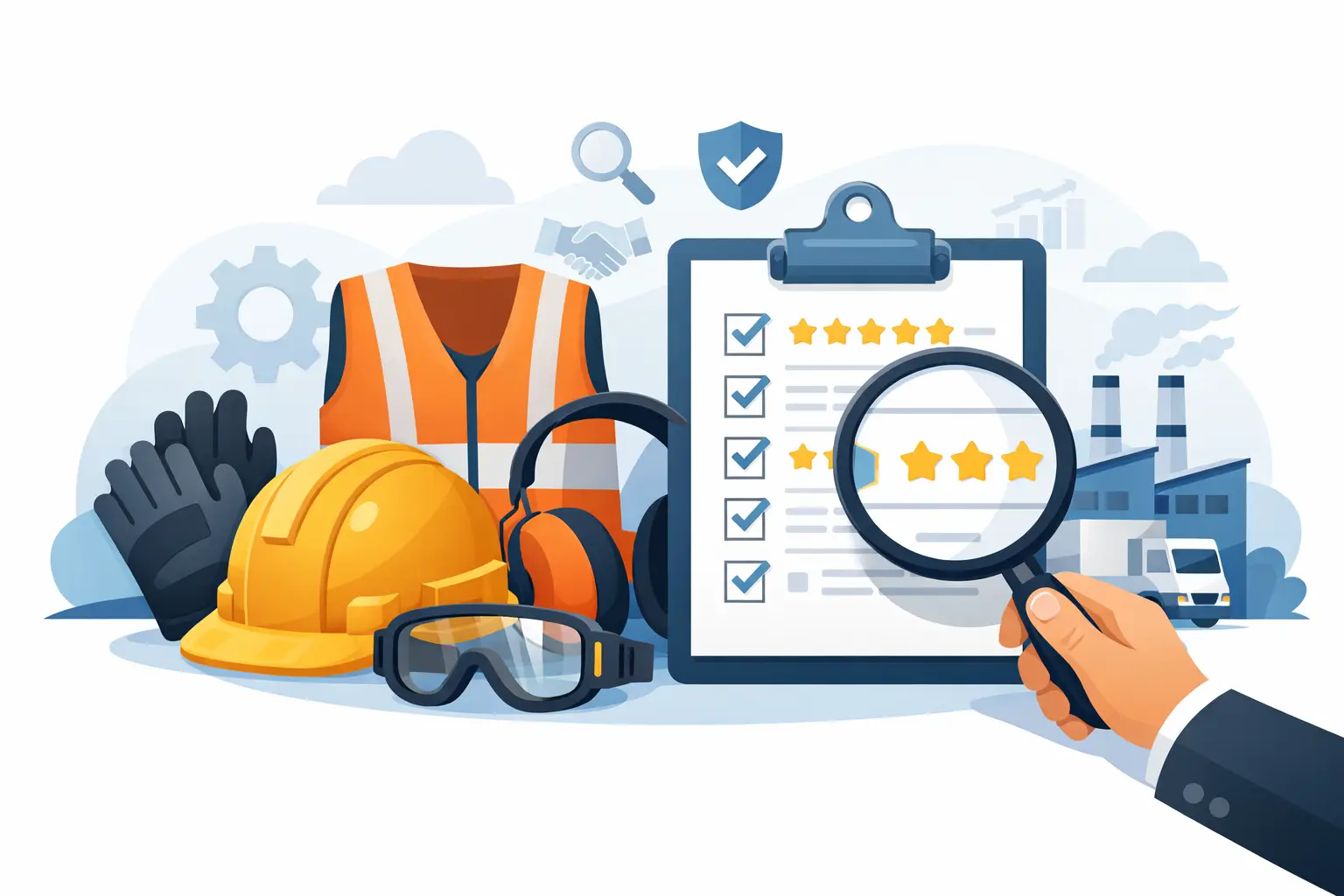
For recurring purchases, create a short scorecard rather than relying on individual buying decisions. Rate suppliers on product traceability, specification quality, recognized brands, stock visibility, lead-time accuracy, technical response, packaging, freight performance, and resolution of order issues. Add category-specific requirements for lifting gear, PPE, electrical safety, tools, or maintenance parts.
Review supplier performance after real orders, not just during onboarding. Did the delivered item match the ordered specification? Were certificates available when required? Did the shipment arrive intact? Was a backorder communicated early? Did the supplier help resolve a problem quickly? These are practical indicators of accountability.
A scorecard is especially useful when several departments buy safety equipment. Procurement may focus on cost and availability, HSE may focus on compliance, and field operations may focus on fit, durability, and delivery speed. A shared evaluation process keeps these needs aligned and avoids selecting a supplier that performs well in only one area.
Choose a Partner That Understands Operational Consequences
Safety equipment purchasing is most effective when it supports uninterrupted work rather than reacting to shortages after they occur. Keep approved specifications, commonly used part numbers, expected consumption rates, and inspection-driven replacement needs organized. This gives suppliers a clearer basis for stocking recommendations and gives your team fewer last-minute decisions.
Pro Oil Field Supply supports this approach with heavy-duty lifting, rigging, safety, maintenance, and replacement products from recognized manufacturers, along with custom sourcing for specialized operational requirements. For buyers managing demanding sites, the goal is straightforward: get correctly specified equipment, with clear ratings and dependable delivery, before a small supply gap becomes a safety or uptime problem.
The best supplier relationship is measured on the jobsite. When crews can verify the rating, install the correct component, complete the work safely, and keep the schedule moving, the supply decision has done its job.