What Is a Master Link and How Is It Used?

A multi-leg chain sling can be correctly sized at every leg and still be unsafe if the connection at the top is wrong. So, what is a master link? It is the forged alloy-steel link that gathers one or more sling legs at the top of an assembly and provides the connection point to a crane hook, hoist hook, or other approved lifting device.
In heavy lifting, the master link is not a minor accessory. It is a load-bearing component that helps define how the entire sling assembly performs. Its working load limit, dimensions, configuration, and condition must match the sling design and the planned lift. A mismatch can prevent proper hook seating, overload a component, or create an unsafe side-loading condition before the load even leaves the ground.
What Is a Master Link in Rigging?
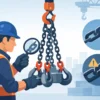
A master link is generally an oval or oblong, closed link made from quenched and tempered alloy steel. It sits at the upper end of a chain sling and joins the sling to the lifting hook. Depending on the assembly, it may connect directly to one chain leg or serve as the primary link in a master link assembly for two-, three-, or four-leg chain slings.
For a single-leg chain sling, one master link may connect the sling leg directly to the crane or hoist hook. Multi-leg slings commonly use a large master link combined with smaller intermediate links. This arrangement gives each sling leg a suitable connection point while keeping the main master link large enough to seat correctly in the lifting hook.
The component may look simple, but its geometry matters. The inside length and width must accommodate the hook without forcing the hook tip, throat, or saddle into an improper position. The load should bear in the hook saddle as intended, not on the point of the hook or against a side edge of the link.
A master link should not be confused with a coupling link, connecting link, or repair link. Those components join sections of chain or attach fittings within an assembly. The master link is the top connection point designed for the rated sling configuration. Using a chain connector in place of a properly rated master link is not an acceptable substitution.
How Master Links Work in Chain Sling Assemblies
The master link transfers the load from the crane hook into the sling legs. In a vertical lift with a single leg, that load path is direct. In a multi-leg bridle, the master link receives force from each loaded leg, and the actual force depends on sling angles, load balance, and the way the load is rigged.
That is why the master link cannot be selected by simply adding the individual chain-leg capacities. As sling angles decrease, leg tension rises. A load that appears evenly distributed can also shift during the lift, causing one leg to carry more than its expected share. The rated capacity of the complete sling assembly must account for the approved configuration, the number of legs, and the sling angle.
Master link assemblies are particularly useful when a crane hook is too large to connect directly to the smaller links at the top of each chain leg. Intermediate links bridge that dimensional difference. They also help keep the sling legs properly arranged beneath the main link rather than forcing multiple legs into one crowded connection point.
The right assembly depends on the lift plan. A compact single-leg sling may need one properly sized master link. A four-leg bridle used for equipment modules, fabricated skids, or heavy valves may require a master link assembly engineered for the chain size, lifting points, hook dimensions, and rated load.
Selecting the Right Master Link
Selection starts with the complete lifting system, not the master link alone. The chain grade and size, number of sling legs, attachment fittings, intended sling angles, and lifting-device hook dimensions all affect the correct choice.
A procurement or rigging team should verify these five points before ordering or putting a master link into service:
- The working load limit is suitable for the rated sling assembly and intended lifting configuration.
- The link is approved for the chain grade and chain size used in the sling.
- The inside dimensions allow the crane or hoist hook to seat in the saddle without crowding or point loading.
- The master link or master link assembly is compatible with the number of sling legs and the required top connection arrangement.
- Manufacturer identification, traceability information, and applicable markings are available and legible.
Working load limit is the first field specification most buyers check, and it should remain the first. However, a high WLL does not solve an improper-fit problem. A larger link may have ample capacity but still be unsuitable if it can shift excessively, sit incorrectly in the hook, or cause uneven loading in a multi-leg assembly.
Likewise, a link that fits physically is not automatically acceptable. The material grade, heat treatment, forging quality, and manufacturer rating matter. Certified alloy lifting components from recognized manufacturers are designed and tested for lifting service. General-purpose hardware, welded rings of unknown origin, or unmarked links should not be introduced into an overhead lifting assembly.
For operations that use chain slings across multiple sites, standardizing approved assemblies can reduce rushed substitutions in the field. Record the manufacturer, item number, WLL, compatible chain size, and internal dimensions in the sling register or purchasing system. That makes replacement sourcing faster when a sling is removed from service.
Inspection and Removal From Service
A master link should be inspected as part of the complete sling inspection process before use and at the frequency required by your site procedures, manufacturer instructions, and applicable lifting standards. The purpose is not only to find a visibly broken component. It is to identify damage that changes the link’s strength, shape, or load path.
Check the link for stretching, bending, twisting, cracks, gouges, deep nicks, excessive wear, corrosion, heat discoloration, arc strikes, and unauthorized welding. Compare the link’s shape with an undamaged component of the same type when possible. An oval link that has opened, flattened, or become visibly asymmetric has experienced conditions it was not designed to tolerate.
Also inspect contact areas where the hook bears on the master link and where intermediate links connect to it. Wear often develops at these points first. If identification markings or WLL information are missing or unreadable, treat that as a control issue. The sling must remain positively identified and traceable to its rated configuration.
Do not straighten, weld, heat, or field-modify a master link to return it to service. These actions can alter the metallurgy and invalidate the component rating. When damage, deformation, questionable history, or identification loss is found, remove the sling from service and have it evaluated according to the manufacturer’s requirements. Replacing one component may be possible only when the rebuilt sling assembly is properly configured, tagged, and inspected by a qualified party.
Common Rigging Mistakes to Avoid
One common mistake is placing more chain legs or fittings into a master link than the assembly was designed to carry. Crowding can prevent free movement, concentrate load on an edge, and make equalization less predictable. Another is connecting the link to a hook that is too small or too large for proper seating.
Side loading is also a serious concern. A master link is intended to carry load in its designed plane and orientation. Pulling from an angle, trapping the link against the hook tip, or allowing it to bear against a sharp edge can introduce stresses outside normal rated use.
Do not assume all legs of a bridle share a load equally. Uneven center of gravity, unequal leg lengths, different attachment elevations, and changing sling angles can shift force to one leg. The lift plan should reflect the actual load geometry, and the selected sling assembly should have the capacity for that planned use.
Source Master Links as Rated Lifting Components
For buyers supporting active field operations, the practical requirement is clear: source master links by manufacturer, WLL, chain compatibility, dimensions, and approved assembly type. A vague request for a “lifting ring” can lead to the wrong component and unnecessary downtime.
Pro Oil Field Supply supports industrial lifting requirements with rated rigging hardware and chain sling components selected around actual load and fit requirements. When the application is specialized, provide the chain size and grade, number of legs, target WLL, sling angle, hook dimensions, and any existing component identification before ordering.
The safest master link is the one that is correctly rated, correctly fitted, clearly identified, and inspected before every lift. Treat it with the same attention you give the chain, hooks, and lifting points below it – because the entire load depends on that connection.