Grade 100 Chain Slings for Safer Heavy Lifts
A sling can be rated for the load and still be wrong for the lift. A short reach can force an unsafe sling angle. The wrong hook can prevent positive engagement. An unbalanced load can overload one leg long before the crane reaches its limit. Grade 100 chain slings address demanding lifting work with high-strength alloy chain, but their value depends on correct configuration, verified working load limit, and disciplined inspection before every use.
For oilfield, construction, maritime, and heavy-equipment operations, chain slings remain a practical choice where abrasion, heat, sharp-edged loads, and rough handling would quickly damage lighter lifting media. Grade 100 alloy chain provides more lifting capacity than Grade 80 chain of the same size in many comparable configurations, often by about 25 percent. That capacity advantage can reduce sling weight and improve handling, but it does not remove the need to engineer the lift around the actual load and pick points.
Why Grade 100 Chain Slings Are Used on Heavy Jobs
Grade 100 chain is quenched-and-tempered alloy steel designed for overhead lifting when assembled with matching Grade 100 components. It is commonly selected for machinery moves, fabricated steel, valves, pipe assemblies, offshore equipment, structural components, and maintenance lifts where durability matters as much as capacity.
The primary advantage is working load limit. A higher-strength chain can provide a higher WLL at a given diameter, or allow a smaller, lighter sling to perform the required job. For rigging crews working around a crane, forklift, or hoist, less weight can make positioning easier and reduce manual handling strain.
That benefit has a trade-off. Grade 100 fittings must be compatible with the chain and suitable for overhead lifting. A sling is only as capable as its lowest-rated component. Substituting a non-rated hook, adding an unapproved connector, or using a damaged master link can reduce the assembly’s safe capacity regardless of the chain grade stamped on the tag.
Select the Sling Configuration Before the Capacity
Working load limit is not simply the weight of the object on the lift plan. Buyers need to account for sling configuration, angle, center of gravity, load contact points, hitch type, and how each leg shares the load.
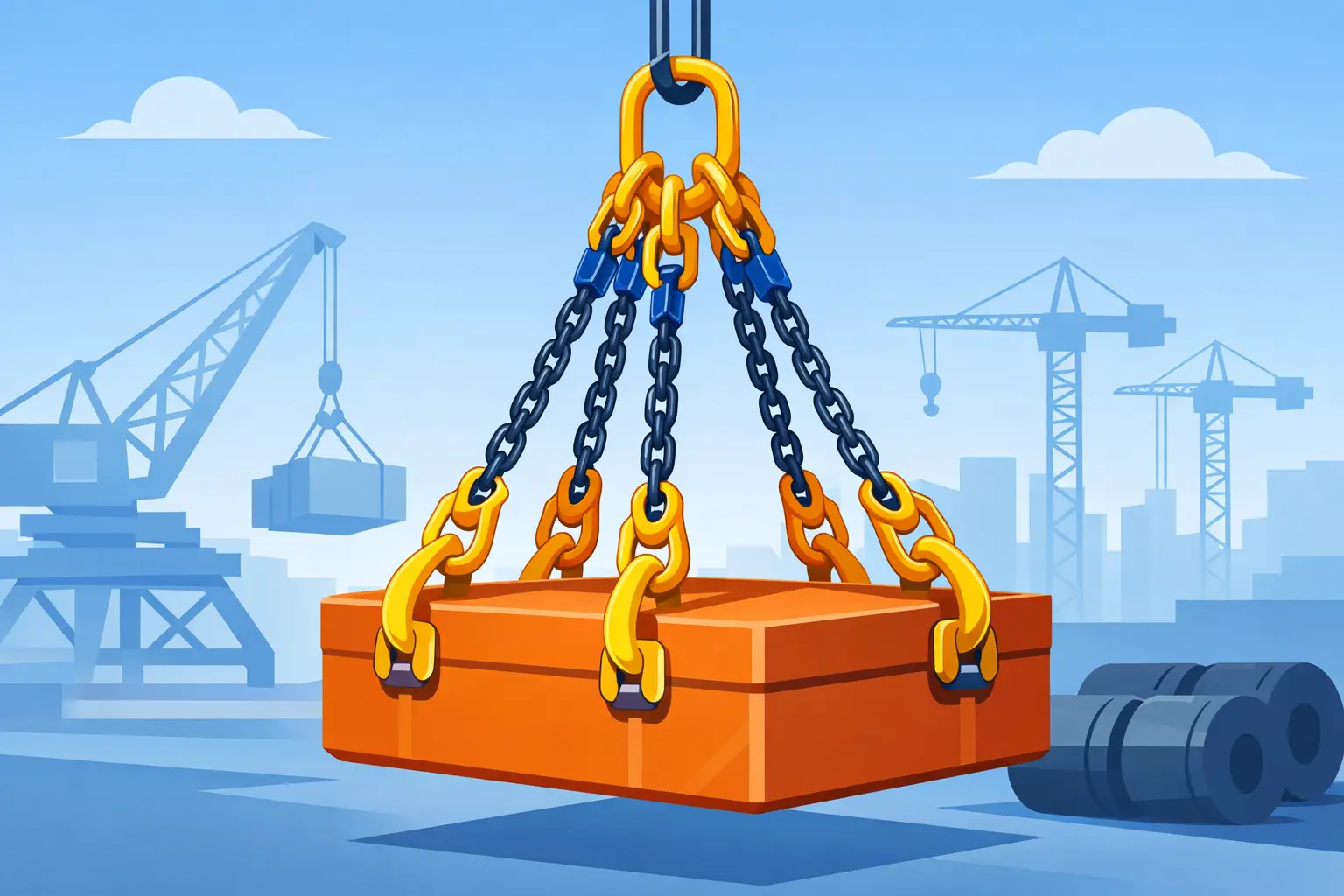
A single-leg sling is straightforward when the load has one approved lifting point directly above its center of gravity. In the field, that is less common than it sounds. Two-leg and four-leg assemblies are often used to stabilize equipment, distribute forces across multiple lifting points, and keep the load level. Their ratings depend on the included angle between sling legs.
As sling legs move away from vertical, tension rises sharply. A wider angle creates a larger horizontal force component and reduces the effective vertical lifting capacity of the assembly. A sling rated for a given load at a narrow angle may not be suitable at a wide angle. The sling tag and the manufacturer’s WLL chart must be used for the actual angle range, not the best-case vertical rating.
Four-leg slings require additional caution. Unless the load and pick points are engineered to equalize tension, it is generally unsafe to assume all four legs carry an equal share. Uneven geometry, a shifted center of gravity, or different pick-point elevations can place more force on one or two legs. For critical lifts, use a documented lift plan and confirm the rigging arrangement with the competent person responsible for the operation.
Common Hitch Choices
Straight vertical hitches place the load directly in line with the sling leg. They are common for lifting from pad eyes, hoist rings, lifting lugs, and other approved attachment points.
A basket hitch supports the load in a cradle and can increase capacity when used correctly, but the load must be stable and the sling must not be exposed to damaging edges. A choker hitch tightens around the load and is useful for certain pipe, bundle, and irregular-shape lifts, but it reduces capacity because of the choke angle and contact conditions. Do not use a choker as a shortcut when a positive lifting point or properly designed basket arrangement is required.
Match Hooks, Master Links, and Connectors to the Job
The chain itself is only one part of the sling assembly. A complete Grade 100 chain sling may include a master link or master link assembly, shortening hooks, sling hooks, foundry hooks, grab hooks, self-locking hooks, and connecting links. Each item should be marked, rated, and selected for its specific function.
Self-locking hooks are often preferred where accidental disengagement is a concern. The latch locks under load and should not be confused with a standard latch that merely helps retain a slack sling in the hook bowl. For lifting lugs and pad eyes, verify that the hook fits without point loading, side loading, or forcing the latch against the attachment.
Shortening devices are useful when crews need to adjust leg length without altering the chain. However, shortening must be done only with approved Grade 100 shortening components and according to the manufacturer’s instructions. Do not shorten a sling by tying knots, twisting chain, wrapping it around a hook tip, or using bolts, wire, or improvised hardware.
Master links deserve the same scrutiny as end fittings. They must fit the crane hook or hoist hook correctly, sit in the bowl rather than on the hook tip, and have sufficient clearance for the planned connection. If multiple sling legs connect to a master link assembly, confirm the assembly rating covers the intended leg count and angle.
Measure Reach Correctly and Verify the WLL Tag
Reach is commonly misunderstood during procurement. For a multi-leg chain sling, reach is typically measured from the bearing point of the top master link to the bearing point of the bottom hook or fitting with the sling pulled taut. A stated reach does not describe how much chain is available after a shortening hook is engaged, nor does it compensate for a wide sling angle.
Before ordering, provide the required reach, number of legs, chain size, end-fitting style, hitch requirements, and the maximum load at the expected sling angle. Also identify whether the lift involves sharp edges, elevated temperatures, corrosive exposure, or special handling conditions. These details determine whether a standard assembly is suitable or whether a custom-built sling is the safer purchasing decision.
Every sling should carry durable identification showing the manufacturer or assembler, grade, chain size, number of legs where applicable, working load limit, and a traceable identification number. If the tag is missing or unreadable, remove the sling from service until it can be evaluated and properly identified. A crew should never estimate capacity from chain diameter or appearance alone.
Inspection Is Part of Every Lift
Chain slings are built for hard service, not indefinite service. Operators should inspect the sling before each use, with periodic inspections performed and documented by a qualified person according to the applicable site program and recognized lifting standards.
Look closely for stretched links, nicks, gouges, cracks, twists, bent hooks, worn hook throats, damaged latches, unauthorized weld repairs, corrosion, heat discoloration, and missing identification. Pay special attention to high-contact areas: hook bowls, chain links near end fittings, shortening pockets, and master-link bearing points.
Remove a sling from service when damage or wear exceeds the manufacturer’s allowable limits, when a component does not function correctly, or when the sling has been shock loaded. Chain slings should not be field-repaired by welding or by replacing components with unverified hardware. Repairs and re-certification should be handled by a qualified provider using compatible, approved components.
Buy for the Lift Plan, Not Just the Ton Rating
The fastest way to create a delay is to order a sling based only on a tonnage figure and discover it does not fit the load or meet the required angle rating. Procurement teams should treat the sling as a complete lifting assembly, with the correct chain grade, configuration, reach, fittings, identification, and certification documentation.
For recurring lifts, standardizing approved Grade 100 sling assemblies by equipment type can reduce selection errors and make inspection easier across crews and shifts. Keep replacement slings available for high-use operations, especially when downtime from a failed inspection would stop maintenance or loading work.
Pro Oil Field Supply supports heavy-duty lifting requirements with certified rigging products, clear working load limit information, and sourcing support for specialized assemblies. When the load, lift points, and operating conditions are known before purchase, the right chain sling becomes one less variable in a high-consequence job.
A properly selected Grade 100 chain sling does more than lift the load. It gives the crew a defined, traceable connection between the hook and the work – one built to keep the operation controlled when schedule pressure is highest.