Heavy Duty Lifting Clamps for Safer Load Control
A steel plate can weigh several tons, yet the lift often depends on a small contact area at the clamp jaw. That is why selecting heavy duty lifting clamps is not a routine hardware purchase. Clamp type, working load limit, plate condition, lift direction, and operator handling all affect whether a load remains controlled from pick to placement.
For oilfield yards, fabrication shops, ports, construction sites, and maintenance operations, the right clamp helps crews move material efficiently without adding avoidable rigging risk. The wrong clamp can mark finished surfaces, lose grip on contaminated steel, overload under an angled pull, or create a dangerous release hazard when the load is set down.
What Heavy Duty Lifting Clamps Are Designed to Do
Heavy duty lifting clamps grip, support, or engage a load so it can be lifted by a hoist, crane, chain sling, or wire-rope assembly. They are commonly used for steel plate, structural sections, pipe, beams, fabricated assemblies, and other loads that are difficult or inefficient to handle with standard slings alone.
Unlike a shackle or master link, a clamp is not a universal connection point. Its capacity and application are tied closely to the load geometry and the way force is applied. A vertical plate clamp may be rated to lift a plate straight up, while a horizontal clamp is intended to work in pairs with a sling arrangement. A clamp intended for non-marring material handling may protect a finished surface but have different grip and capacity limits than a serrated-jaw steel plate clamp.
This distinction matters in field purchasing. The WLL stamped on a clamp is only valid under the manufacturer’s stated conditions. Those conditions can include plate thickness range, material hardness, surface condition, minimum load requirements, sling angle, and whether the clamp is used singly or as part of a matched set.
Start With the Load, Not the Clamp
The most reliable selection process begins with an accurate description of the load. Procurement teams should confirm the load weight, dimensions, thickness, center of gravity, material grade, and surface condition before comparing products. “Steel plate” is not enough information when the job involves scale, paint, oil, galvanized coating, or a surface that cannot be damaged.
A clamp also needs sufficient engagement. Plate clamps have a specified jaw opening and plate-thickness range. Selecting a wider jaw does not automatically make the clamp more versatile. If the material is below the approved thickness range, the cam or jaw may not develop the intended grip. If it is too thick, the clamp may not seat correctly at all.
The expected lift path is equally important. Consider whether the load will be lifted vertically, transferred horizontally, turned from a horizontal position to vertical, or held at an angle during positioning. Each movement creates different forces at the clamp body and jaw. Do not assume that a clamp rated for vertical lifting can safely manage a turning operation without explicit manufacturer approval.
WLL Is a Limit, Not a Starting Point
Working load limit is the maximum permitted service load under stated operating conditions. It is not the target capacity for routine lifts, and it is not a substitute for a lift plan. When multiple clamps are used, load distribution is rarely perfectly equal. A shifted center of gravity, uneven sling legs, or one clamp engaging before another can place more force on a single unit.
This is particularly relevant with long plate, fabricated skids, and structural members. The rated capacity of two clamps does not simply double when the sling geometry reduces the effective capacity of the system. Sling angles increase leg tension, and the clamp selection must account for that added force as well as the intended orientation.
For critical or unusual lifts, the rigging supervisor should verify the complete assembly: clamps, sling legs, master links, shackles, hoist connection, and the lifting device itself. The lowest-rated approved component governs the capacity of the lift.
Match Clamp Design to the Job
Different clamp designs solve different handling problems. Matching the design to the application reduces rehandling, protects material, and gives the crew a more predictable lift.
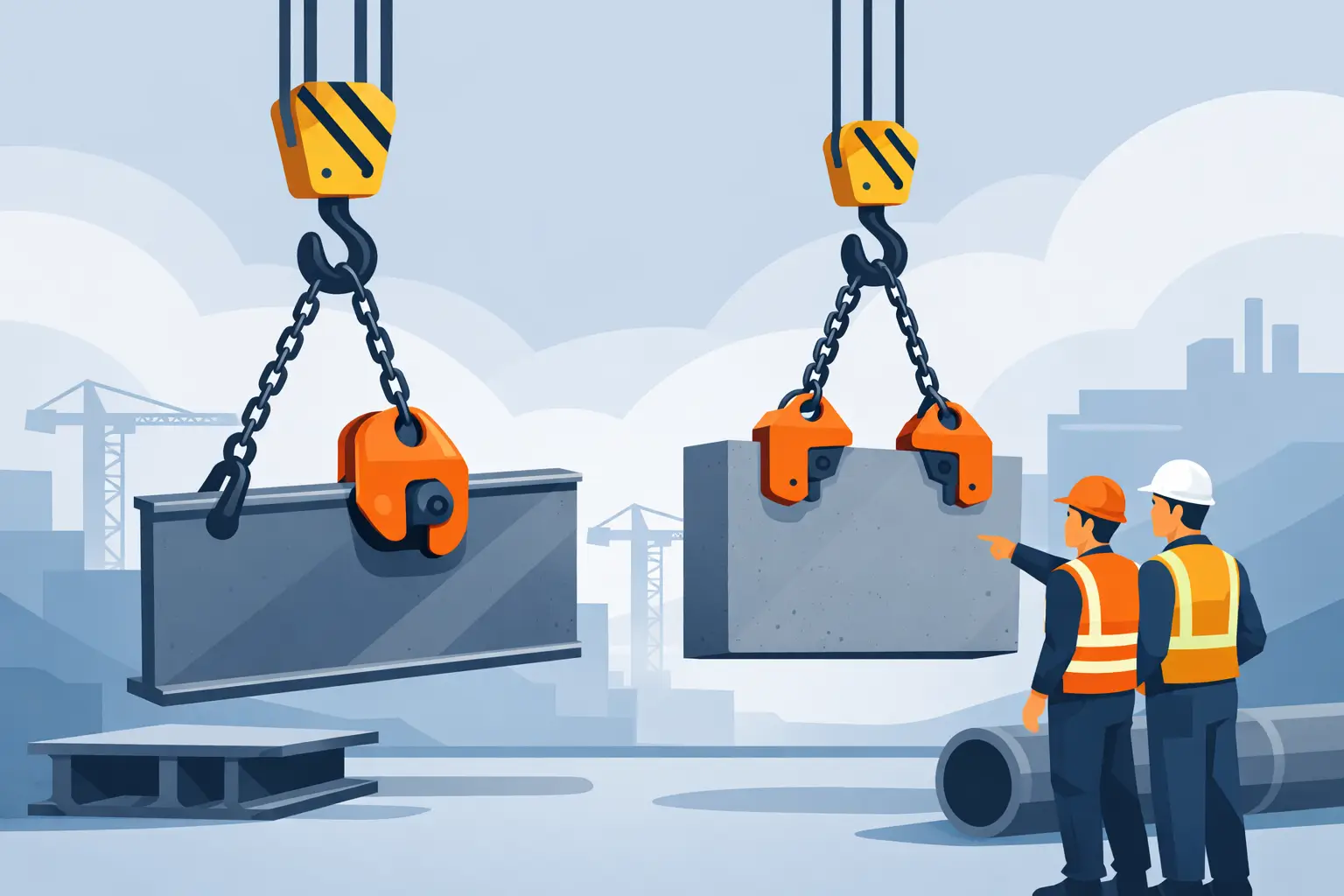
Vertical lifting clamps are typically used to lift plate or structural steel from a vertical position. Many designs use a locking lever or cam mechanism to hold the jaw in position before the load is tensioned. Horizontal lifting clamps are generally used in pairs or sets to move plate in a horizontal orientation. Their ratings and configurations must be checked carefully because they rely on the sling arrangement and required lift angle.
Beam clamps are intended to connect to a beam flange and provide a lifting point for hoists or rigging assemblies. They must match the flange width and approved beam profile. Pipe lifting clamps and specialized lifting tongs are designed around cylindrical loads, where controlling roll and maintaining stable contact are central concerns.
For painted, polished, stainless, or coated material, non-marring clamps may be the better choice. The trade-off is that surface-protection requirements can limit the available gripping method and may require stricter preparation. A standard serrated jaw can offer strong bite on suitable steel, but it can permanently damage the workpiece.
Four Checks Before Every Lift
Even a correctly specified clamp can become unsafe through wear, contamination, or improper setup. Before a lift, the designated competent person and lifting crew should verify these conditions:
- The clamp identification, WLL, jaw range, and permitted lifting direction match the planned lift.
- The jaw, cam, pivot, locking mechanism, and lifting eye show no deformation, cracks, excessive wear, unauthorized repair, or missing components.
- The load contact area is clean enough for the approved gripping method, with no oil, loose scale, ice, paint buildup, or debris that could affect engagement.
- The clamp is fully seated in the correct position, the load is balanced as planned, and all personnel are clear before tension is applied.
A controlled test lift is often the practical next step. Raise the load only enough to confirm balance, engagement, and clearance before committing to the full travel path. If the load shifts, the clamp slips, or the rigging does not hang as expected, lower the load and correct the issue. Do not attempt to reposition a clamp while the load is suspended.
Inspection and Maintenance Protect Availability
Lifting clamps operate in environments that accelerate wear: abrasive dust, salt air, drilling fluids, weld spatter, moisture, and repeated high-cycle use. A clamp that looks serviceable from a distance may have worn teeth, damaged threads, a distorted body, or a weak locking mechanism that affects performance.
Daily pre-use checks should be supported by scheduled documented inspections based on service severity, applicable regulations, site procedures, and manufacturer guidance. Remove equipment from service if markings are unreadable, components are damaged, jaw teeth are worn beyond approved limits, or operation is not positive and smooth. Field modifications, welding, grinding, and replacement with unapproved components can compromise the clamp’s rated performance.
Maintenance also supports uptime. Keeping genuine replacement parts, inspection records, and compatible rigging hardware available prevents a minor issue from becoming a delayed shutdown. For operations working across remote yards or international sites, standardizing commonly used clamp sizes and configurations can simplify replenishment and crew familiarity.
Buying Heavy Duty Lifting Clamps With Confidence
Industrial buyers should expect more than a general capacity label. The product information should identify the manufacturer, item number, WLL, jaw capacity, intended orientation, material or series, and any application-specific restrictions. Recognized lifting brands provide the traceability and documentation that procurement, HSE, and site supervisors need to make a defensible selection.
It also pays to look at the whole connection. A correctly rated clamp still requires compatible shackles, hooks, chain slings, wire-rope slings, and master links. Pin diameter, throat opening, sling-leg angle, and connection geometry can all affect field usability. Specifying the full assembly at the same time reduces mismatches at the jobsite.
Pro Oil Field Supply supports heavy industrial buyers with certified lifting and rigging products, clear load-capacity information, and sourcing support for specialized requirements. When a replacement clamp or a complete rigging configuration is needed quickly, precise specifications help get the right equipment to the field without costly guesswork.
The best clamp choice is the one that fits the actual load, the actual lift path, and the actual site conditions. Confirm those details before ordering, inspect the equipment before use, and give crews the controlled lifting point they need to keep work moving safely.