
Load Binder Selection Guide for Heavy Hauls
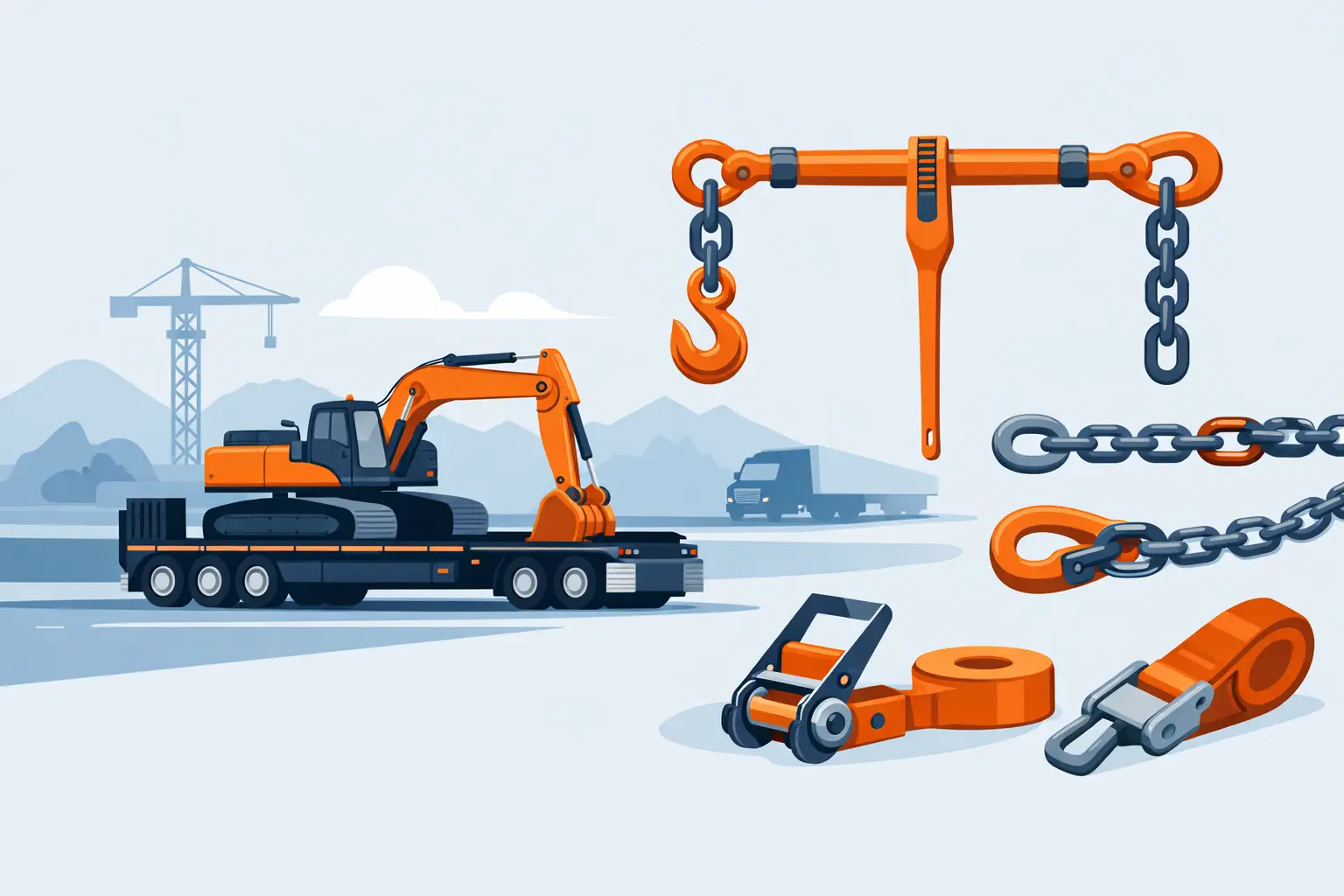
A load binder is often the last device tensioned before a truck leaves the yard, but it should never be the last item considered. A binder that does not match the chain, anchor points, cargo weight, or route conditions can compromise an otherwise well-planned securement system. This load binder selection guide focuses on the specifications that matter in oilfield, construction, maritime, and heavy-equipment transport: compatible chain size, working load limit, operating method, inspection condition, and control of stored energy.
Start With the Complete Securement System
A load binder is not a standalone capacity rating. It is one part of a tiedown assembly that can include transport chain, hooks, grab hooks, trailer anchor points, and attachment points on the load. The working load limit of the complete assembly is governed by its lowest-rated component.
For example, installing a high-capacity binder on undersized chain does not increase the system capacity. The same applies when a properly rated chain is connected to a trailer rub rail, D-ring, or cargo attachment point with a lower rating. Verify each component before assigning a securement capacity.
Begin with the cargo’s weight, dimensions, center of gravity, and expected movement. A tracked excavator, drilling component, skid package, pipe bundle, or fabricated structure may require different tiedown positions and restraint against forward, rearward, lateral, and vertical movement. Follow applicable DOT, FMCSA, customer, port, and site-specific cargo-securement requirements. The number of tiedowns and their arrangement must be based on the load and governing rules, not on the binder capacity alone.
Load Binder Selection Guide: Lever or Ratchet?
The main choice is generally between a lever binder and a ratchet binder. Both can be effective when properly selected, used, and inspected. The right choice depends on the crew’s operating conditions, the tensioning precision required, available clearance, and the organization’s safety procedures.
Lever binders for fast, familiar securement
Lever binders use an over-center action to tension chain quickly. They are compact, durable, and common where trained crews need to secure loads efficiently. Their simple mechanical design can be an advantage in dirty field conditions where equipment must stand up to frequent handling.
The trade-off is stored energy. A lever binder can release forcefully if it is improperly positioned, damaged, or opened without controlled handling. The handle travel also requires clear space. Workers must stay out of the handle’s path, maintain stable footing, and use the manufacturer’s approved operating method. Never improvise with cheater pipes unless the manufacturer specifically permits that use and your company procedure allows it.
Lever binders suit applications where crews are experienced with over-center binders, access around the trailer is clear, and rapid tensioning is a priority. Many operations also use handle retention devices or safety latches to reduce the chance of unintended handle movement during transit.
Ratchet binders for controlled tensioning
Ratchet binders tension chain through a screw-and-ratchet mechanism. They allow more gradual adjustment and typically require less handle swing than lever models. This makes them a practical option around irregular cargo, confined trailer positions, and loads where operators need closer control over chain tension.
The trade-off is speed. Ratchet binders take more turns to install and release, and their threaded components require attention. Keep threads clean, lubricated as specified by the manufacturer, and free from damage. A ratchet binder that is difficult to turn is not a reason to apply excessive force. It is a reason to stop and inspect the equipment.
For many fleets, ratchet binders are the preferred choice when reducing sudden handle movement and improving tension control outweighs the additional time per tiedown. They are particularly useful when equipment is secured repeatedly by mixed crews or when work areas offer limited clearance.
Match the Binder to Chain Size and WLL
Load binders are commonly identified by compatible transport-chain sizes, such as 5/16 inch to 3/8 inch or 3/8 inch to 1/2 inch. That range is not interchangeable permission. Confirm the specific binder’s marked working load limit and verify compatibility with the exact chain grade and size in service.
Grade 70 transport chain is widely used for cargo securement, while higher-grade alloy chain may be used in certain applications. Do not assume that similar-looking chain has the same capacity or approved use. Read the chain markings, binder identification, and manufacturer documentation. Grade, diameter, and WLL must be known before the system is placed in service.
Hooks deserve the same attention. Binder end fittings must fully engage compatible chain links without side loading, tip loading, or forced fit-up. A hook that will not seat correctly can shift under vibration and may damage the chain. If the connection requires force, modification, or an improvised adapter, it is not the right combination.
Choose a binder with a WLL that meets or exceeds the required capacity for its position in the tiedown plan. Do not confuse working load limit with break strength, proof test, or ultimate capacity. WLL is the service rating used for selection. It must remain legible on the binder, and any equipment with missing or unreadable identification should be removed from service until its status is confirmed.
Account for Cargo Shape, Trailer Access, and Environment
The same binder can perform differently depending on how it is installed. Chain angle affects the restraint provided in each direction. A nearly vertical tiedown may help hold a load down but provide limited fore-and-aft control. A very shallow angle may introduce other concerns, including reduced downward restraint and contact with trailer components. Plan tiedown locations to restrain the expected movement of the cargo rather than simply using the shortest chain path.
Sharp edges, hot surfaces, abrasive contact points, and moving equipment can damage chain or prevent a binder from holding its intended tension. Protect the tiedown where required, eliminate contact with sharp corners, and keep binders positioned where they can be inspected without climbing over cargo or working in a traffic path.
Environmental exposure matters as well. Mud, salt spray, drilling fluids, sand, ice, and corrosion can affect ratchet threads, pivot points, hooks, and markings. Maritime and coastal operations should pay particular attention to corrosion control and inspection intervals. Equipment stored loose in a truck box can also sustain damage that is missed until it is needed on a job.
Inspect Before Tensioning and During Transport
A quick visual check is not enough for equipment that restrains heavy cargo at highway speed or across active industrial sites. Inspect binders before use for bent handles, elongated hook openings, cracked welds, damaged threads, worn pawls, distorted frames, and missing safety components. Confirm the ratchet engages positively or that the lever mechanism closes and retains as designed.
Also inspect the chain and connection points. Look for stretched links, nicks, gouges, heat damage, corrosion, unauthorized weld repairs, and deformation. If any component is questionable, remove it from service. A replacement binder costs far less than a load shift, damaged equipment, injury, or shutdown.
After initial tensioning, verify that the chain is correctly seated and that the binder is positioned as intended. Recheck tiedowns after beginning a trip and at intervals required by the applicable regulations and company procedures. Cargo can settle, suspension can move, and vibration can alter tension. Retension only after assessing why the system changed.
Build a Standard That Crews Can Repeat
Procurement teams should avoid buying binders solely by price or nominal chain range. Standardizing approved binder types, chain grades, WLL markings, inspection criteria, and storage practices makes field decisions faster and reduces mismatched hardware. It also simplifies replacement ordering when a binder is removed from service.
For critical operations, maintain equipment records that identify manufacturer, item number, chain compatibility, WLL, inspection history, and assigned vehicle or trailer where applicable. This is especially useful for multi-site fleets, rental equipment, and projects that move between the United States, MENA, Africa, and port facilities with different operating requirements.
Pro Oil Field Supply supports heavy-duty securement needs with clearly specified industrial equipment and sourcing support for operations that cannot afford uncertainty. Select certified, identifiable hardware from established manufacturers, then ensure crews have the training and inspection discipline to use it correctly.
The best binder is the one that fits the complete system, can be safely operated in the actual work area, and remains clearly rated and serviceable through every mile of the haul.