Rigging Certification Guide for Safer Lifts
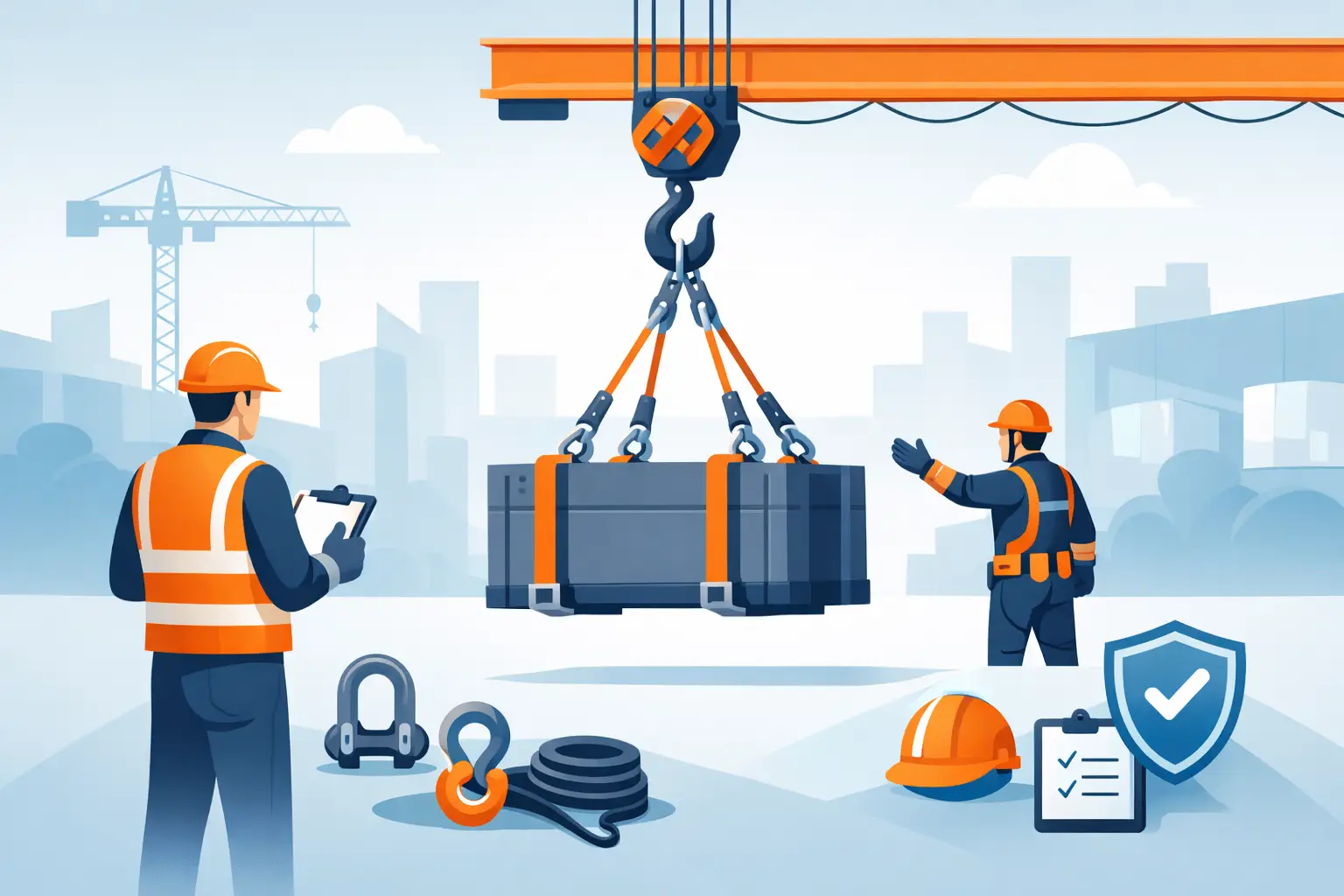
A lift can look routine right up to the moment it is not. A mismatched shackle, an unverified rigger, or a sling used beyond its rated configuration can turn a planned move into downtime, equipment damage, or a serious injury. This rigging certification guide helps supervisors, HSE teams, and procurement managers separate meaningful qualification and equipment documentation from paperwork that does not support a safe lift.
What Rigging Certification Actually Covers
Rigging certification is not one universal credential that applies equally to every worker, lift, jobsite, and jurisdiction. Requirements vary by industry, employer policy, client specification, work location, and the type of lifting operation being performed. That distinction matters when a crew works across construction, oilfield, maritime, warehouse, and heavy-equipment environments.
In practical terms, a certified or qualified rigger should be able to select suitable rigging, understand working load limits, identify the center of gravity, calculate sling-angle effects, inspect hardware, and communicate the lift plan to the crew. The credential itself is evidence of training and assessment. It does not replace field experience, task-specific authorization, or a supervisor’s responsibility to stop an unsafe lift.
A crane operator, signalperson, lift director, and rigger may each have separate qualification requirements. One person may fill more than one role only when they have been trained, evaluated, and authorized for each responsibility. Do not assume that an operator card proves rigging competence, or that a rigger course qualifies someone to operate a crane.
Start With the Lift, Not the Certificate
Before reviewing training records, define the lift. A simple, repetitive pick with known loads and standard rigging calls for a different level of planning than a critical lift involving personnel exposure, restricted clearance, multiple cranes, unusual load geometry, or high-value equipment.
The lift category determines what competence and documentation should be verified. For routine work, the focus may be on current rigger qualification, pre-use inspection, correct hardware selection, and clear communication. For complex or critical work, the operation may require an engineered lift plan, a designated lift director, formal calculations, additional inspection controls, and client or site approval.
Load weight is only the starting point. The rigging team must account for the load’s center of gravity, pickup points, sling angle, hitch type, environmental conditions, travel path, and potential shock loading. A 10-ton load does not automatically require 10-ton rigging. In a two-leg bridle, reduced sling angles can increase leg tension well beyond half the load weight. The entire assembly must be selected for the actual forces created during the lift.
Verify Personnel Qualification Records
A useful credential review goes beyond checking whether a card has a current date. Confirm the issuing organization, course scope, expiration date, trainee identity, and the level of assessment completed. Some programs provide awareness training, while others require written and practical examinations. Both have value, but they do not establish the same level of competence.
Ask whether the credential matches the work being assigned. A basic rigging course may be appropriate for straightforward lifts using standard slings, hooks, shackles, and lifting points. Advanced work may require demonstrated knowledge of load-share calculations, below-the-hook devices, nonstandard rigging arrangements, critical-lift controls, and engineered lift planning.
Maintain a site-accessible qualification file that includes training certificates, practical evaluations, employer authorization, refresher training, and records of any task limitations. Employers should also document field observations. A worker can hold a legitimate certificate and still need coaching before handling unfamiliar equipment, such as lifting clamps, hoist rings, spreader beams, or specialized wire-rope terminations.
Equipment Certification Is Different From Worker Certification
The phrase “certified rigging” is often used loosely. For equipment, the more useful question is whether each component is traceable, properly identified, inspected, and suitable for the intended service.
A reliable lifting component should have permanent markings or identification that allow the user to confirm its manufacturer, working load limit, size or grade where applicable, and traceability information. Original manufacturer documentation, certificates of conformance, proof-test records when required, and inspection history support procurement and quality-control processes. They do not make damaged or incorrectly used gear safe.
Working load limit markings must be read as part of the complete system. A master link, chain sling, hook, shackle, lifting point, and connection method each have their own rating and use conditions. The assembly is limited by its lowest-rated component after accounting for the configuration. Never use ultimate breaking strength as an operating rating.
For purchased gear, verify these points before it reaches the jobsite:
- The manufacturer, item number, size, material grade, and working load limit match the purchase order and lift requirement.
- Markings are legible and product documentation is retained with receiving and inspection records.
- Pins, latches, threads, bearings, welds, and moving parts are compatible with the intended connection and service environment.
- The equipment has not been altered, repaired, painted over, heat damaged, or supplied without required identification.
This is where supplier accountability matters. Recognized manufacturers, detailed load ratings, and accurate product identification reduce the risk of receiving hardware that cannot be verified in the field.
Inspect Before Use and at Defined Intervals
Inspection is not a substitute for certification, but it is one of the controls that prevents a previously acceptable component from remaining in service after damage occurs. The user should conduct a pre-use visual inspection before each shift or lift as required by site procedures. A competent person should also perform documented periodic inspections based on service conditions, manufacturer instructions, and applicable rules.
Remove equipment from service when there is doubt about its integrity. Typical rejection conditions include stretched or bent hardware, cracks, excessive wear, damaged threads, deformed hook throats, missing safety latches where required, unauthorized welding, heat discoloration, chain link damage, wire-rope kinks, broken wires, crushed sections, and unreadable identification.
Do not improvise repairs in the field. Grinding a damaged hook, welding on a shackle, replacing a pin with non-approved hardware, or using a bolt in place of a rated pin can eliminate the design margin built into the component. Send questionable gear for evaluation under the manufacturer’s repair requirements or replace it with traceable, properly rated equipment.
Build Certification Checks Into Procurement
Procurement teams influence lifting safety long before the rigging crew arrives at the work area. Specify the manufacturer, product series, working load limit, material grade, dimensional requirements, and documentation needed for the application. Generic descriptions such as “shackle, 10 ton” leave too much room for unsuitable substitutions.
For example, a bow shackle and a screw-pin shackle may carry similar nominal ratings but are not interchangeable in every application. Pin type, body geometry, side loading limits, temperature exposure, and connection clearances can change the selection. The same applies to chain slings, wire-rope slings, lifting clamps, eyebolts, swivel hoist rings, and load-securing devices.
Use a controlled receiving process. Match packing information and certificates to the delivered item, inspect for shipping damage, and enter the equipment into the site’s inspection system before issue. When an operation needs replacement components quickly, preserve traceability by ordering against the original manufacturer item number whenever possible. Pro Oil Field Supply supports this need with identified lifting hardware and sourcing support for specialized requirements.
Keep the Lift Plan Connected to the Gear
The strongest rigging credential and the best hardware will not compensate for a lift plan that ignores field conditions. Review the plan at the point of work, especially when the load, route, weather, crane setup, crew, or rigging configuration changes.
The crew should know the load weight, pickup method, designated signalperson, exclusion zone, travel path, and stop-work authority. Confirm that all components are correctly seated and that sling legs are not twisted, pinched, or loaded over edges without suitable protection. Verify that hooks are loaded in the bowl, not on the tip, and that shackle bodies and pins are loaded within manufacturer guidance.
When the information is incomplete, pause the lift. Getting the right certificate, the right inspection record, or the right replacement shackle may take time, but it takes less time than recovering from a dropped load. Treat qualification, traceability, and lift planning as one operating system: when each is verified before the load leaves the ground, crews can work with greater control and fewer surprises.